
Gatekeeping the Texas Workforce: Programmatic Accreditation Monopolies



Introduction
An early form of rent-seeking goes back to medieval guilds, which cooperated with political authorities to strictly regulate who was allowed to enter certain professions. Today, programmatic accreditors, national licensing exams, and state licensing boards serve a similar function. Occupational licenses often require graduation from a degree program accredited by a board-recognized programmatic accreditor. In professions where only a sole programmatic accreditor is recognized, that private entity becomes an exclusive gatekeeper to licensure. These gatekeepers impose their own ideological agendas and can even raise the degree requirements for entire professions without direct state approval.
Over the past year, the U.S. Department of Education has taken significant steps to correct problems within higher education accreditation, particularly regarding institutional accreditors, including a groundbreaking Notice of Proposed Rulemaking to amend 34 CFR Parts 600, 602, and 668 published in the Federal Register August 20, 2026.1 According to a Wall Street Journal report, the Trump administration is also training its guns on the American Bar Association (ABA) by threatening its recognition as an accreditor.2 This comes in response to decades of alleged discriminatory and protectionist practices by the ABA. It is important to note, however, that programmatic accreditors do not require federal recognition; even without federal recognition as an institutional or programmatic accreditor, the ABA would remain embedded in the legal professions of many states through state-imposed requirements.
On January 6, 2026, the Supreme Court of Texas made national headlines by reasserting its authority over the approval of law schools, breaking the ABA’s monopoly over law school approval for bar licensure. The Court’s stated intent was “to provide stability, certainty, and flexibility to currently approved law schools by guaranteeing ongoing approval to schools that satisfy a set of simple, objective, and ideologically neutral criteria…”3 In this instance, the Court was able to act unilaterally because it exercises administrative control over the state bar; for many other professions, the regulating entity is a licensing board.4 The Court’s positive transformation of the legal profession moved Texas in the right direction, but unfortunately, many other professions are still dominated by their own equivalent of the ABA through state occupational licensing regimes.
The Texas legislature has sought to remove DEI from higher education through SB 17 (88R) and other key legislation, but programmatic accreditation monopolies like the Council on Social Work Education (CSWE) appear to undermine these reforms. Per the official CSWE website, “Programs in states with enacted legislative changes are expected to demonstrate continued compliance with existing accreditation standards…”5 These standards contain more than one hundred references to DEI and related topics, such as: “Social workers understand the pervasive impact of White supremacy and privilege and use their knowledge, awareness, and skills to engage in anti-racist practice.”6 The field’s aversion to ideological neutrality and lawful compliance is not theoretical. In April of this year, Accuracy in Media released an undercover video of a UT Arlington School of Social Work staff member who boasted that, despite recent reforms, “The practice is still the same. It’s just called something different now.”7 Graduation from a CSWE-accredited program is currently required to become a Licensed Master Social Worker in Texas.8,9 To demonstrate the limits of federal reach, the CEO of CSWE wrote in a June letter that CSWE does not believe the recent executive order, “Reforming Accreditation to Strengthen Higher Education,” applies to their organization because it is a programmatic, rather than institutional, accreditor.10
In order to restore state sovereignty over higher education, the Texas state legislature should take three steps. First, remove the names of all programmatic accreditors from state statute. Second, allow the state to directly approve or deny educational programs for licensure purposes. Third, create review and enforcement mechanisms to ensure that all existing and new programmatic accreditors recognized for licensure follow Texas law regarding DEI and that they are separate from and independent of their trade associations. Together, these changes will fill an existing accountability gap whereby private monopolies are empowered to impose ideology, throttle program innovation, and extort students without meaningful state oversight.
This report focuses on 15 programmatic accreditors that have been granted exclusive gatekeeping authority in Texas, but the problems discussed below are nationwide in scope and relevant for programmatic accreditation policy in general.
The Programmatic Accreditation Landscape
Defining Programmatic Accreditation
Higher education accreditation can apply to a whole institution or a specific academic program (or both). Institutional accreditation evaluates the quality and operations of a college or university as a whole, including its governance, finances, and overall academic quality. For the federal government, the intended purpose of recognizing institutional accreditation is to ensure that colleges and universities receiving Title IV funding meet appropriate quality standards.11
In contrast, programmatic accreditation evaluates individual programs’ field-specific training and professional standards. This process is chiefly relevant for specialized occupations that require very particular knowledge, especially those that require licensure to practice. Certification exams and occupational licenses often require graduation from programs that are accredited by specific programmatic accreditors.12
Programmatic Accreditation Monopolies
States rely on programmatic accreditors to ensure that academic programs meet educational and professional standards rather than performing this task themselves. By incorporating programmatic accreditor approval into statute and/or regulation, states delegate educational oversight to private entities. It is important to note that the federal government does not require programmatic accreditors to be federally recognized; any standards for programmatic accreditors must come from state law, deepening the accountability shortfall.
State governments across the country have granted some programmatic accreditors exclusive authority to evaluate postsecondary degree programs for particular licensed professions. In other words, state governments have entrenched private monopolies with gatekeeping authority over the size and nature of the educational pipeline into certain professions. These “sole programmatic accreditors” represent a special challenge to enforcing DEI prohibitions, maintaining educational affordability, and expanding the workforce, especially in many vital healthcare fields.
This report identifies 15 sole programmatic accreditors (SPAs) in Texas, whose monopolies are established by a combination of Texas statutes and regulations (Appendix A). Each SPA exercises control over one or more licensed occupations; this report discusses only one or two of the most significant occupations under each SPA rather than the complete list of affected professions. In Texas, programmatic accreditation monopolies are established in three ways:
- Statute explicitly imposes a sole programmatic accreditor (e.g., Commission on Dental Accreditation, Tex. Occ. Code § 256.002).
- Statute may name a sole programmatic accreditor but grant board/department discretion for alternatives, which the board does not meaningfully use (e.g., American Council on Pharmaceutical Education (now the Accreditation Council for Pharmacy Education), Tex. Occ. Code § 551.003 and 558.051, 22 Tex. Admin. Code § 283.2).
- Statute may fully delegate authority to the relevant board/department which, in turn, recognizes only a sole programmatic accreditor in rulemaking (e.g., National Architectural Accrediting Board, Tex. Occ. Code § 1051.705, 22 Tex. Admin. Code § 1.21).
The Federal Government’s Role in Accreditation
Federal Oversight of Accreditors
The U.S. Department of Education (USDE) recognizes accrediting agencies under authority granted by the Higher Education Act. USDE recognition as an institutional accreditor allows an entity to render institutions of higher education eligible for Title IV federal funding. The specific criteria accrediting agencies must meet are codified in 34 CFR Part 602.13 34 CFR Part 602 evaluates accrediting organizations’ processes, standards, and student achievement. Applications are reviewed by the National Advisory Committee on Institutional Quality and Integrity (NACIQI), a federal advisory body that holds public hearings and makes recommendations to the Senior Department Official (SDO), whose decisions can be appealed to the U.S. Secretary of Education. Recognition is granted for up to five years, after which agencies must undergo renewal, and the Department may place agencies on monitoring or termination status if they fail to meet the standards set forth in 34 CFR Part 602.
Groundbreaking Accreditation Reform
On November 1, 2019, the first Trump administration took historic steps to end decades of monopolist precedent wherein “regional accreditors” maintained exclusive authority to approve institutions of higher education for Title IV federal funding within their region of operations. When Secretary DeVos signed “Student Assistance General Provisions, The Secretary’s Recognition of Accrediting Agencies, The Secretary’s Recognition Procedures for State Agencies”, USDE removed geographic barriers that forced universities to seek approval from a single institutional accreditor.
While there have been many efforts by the federal government to address issues associated with accreditors, recent developments seek to limit the power of accreditors to collaborate with trade associations (Appendix B). On August 19, 2026, the USDE’s Accreditation, Innovation, and Modernization (AIM) Committee issued a Notice of Proposed Rulemaking to amend 34 CFR Part 602. The drafted amendment cuts regional accreditor distinctions entirely. In fact, the new rules make it easier for institutions to switch or hold multiple accreditors. In addition, changes will force real separation between accreditors and affiliated trade associations by requiring agencies to avoid soliciting feedback from trade groups. Next, the proposed amendments confirm that accreditors are not shielded from antitrust laws. Finally, the newly drafted amendment includes updated student achievement benchmarks, permitted use of multiple accreditors, academic freedom standards, removal of race-based preferences, and more.14
As the reconsideration and elimination of DEI-related and anti-competitive practices intensifies at the federal level, the opportunity and pressure for states to confront these same issues dramatically increase.
The Limits of Federal Action
The reforms undertaken by the first and second Trump administrations have done a great deal to strengthen competition and curtail DEI impositions by institutional accreditors. However, the formal role of programmatic accreditors is primarily established by state licensing regimes, so these entities do not require federal recognition, and many recent federal reforms cannot be applied to the parallel problems with programmatic accreditation.
As evidence of this accountability shortfall, five of the 15 SPAs listed in this report are not currently (as of August 9, 2026) recognized by the USDE, yet remain entrenched in Texas licensing without adequate oversight from the state. These SPAs lacking accountability to federal or state officials include: the AVMA Committee on Veterinary Technician Education and Activities (AVMA-CVTEA), Commission on Accreditation of Athletic Training Education (CAATE), Council on Social Work Education (CSWE), Landscape Architectural Accreditation Board (LAAB), and National Architectural Accrediting Board (NAAB).15
Furthermore, at the latest NACIQI meeting in July, Education Under Secretary Nicholas Kent announced that the Council on Chiropractic Education (CCE) and two other programmatic accreditors were voluntarily withdrawing their petitions to continue being recognized by the USDE. Regarding these withdrawals, Under Secretary Kent stated, “The message is unmistakable. Accreditors know they are being held to a higher standard under the Trump administration, and some are either unwilling or unable to meet it.”16 Some of the addressed programmatic accreditors pushed back against this claim, arguing that the process no longer yielded its original value or that it had become politicized.17 Agencies that primarily serve as programmatic accreditors that also provide institutional accreditation to stand.alone schools, like the Commission on Osteopathic College Accreditation, are choosing to drop their institutional accreditation role or simply avoid seeking federal recognition altogether. This means that the gap in government oversight for SPAs in Texas is likely to grow as they are no longer accountable to federal authorities. Currently, Texas lacks the infrastructure to review and approve their accreditation standards and processes.
The reality of federal limitations highlights that programmatic accreditors, especially SPAs, require urgent state action to reassert oversight over Texas’ own occupational licensing ecosystem.
Recent Texas Legislation
Structural Reforms to Institutional Accreditation
Texas has acted to reform institutional accreditation. SB 530 (89th Legislature, 2025) was signed into law on May 20, 2025. SB 530 removed the Southern Association of Colleges and Schools (SACSCOC) as the only recognized accrediting agency named in statute, and instead directed the Texas Higher Education Coordinating Board (THECB) to recognize additional accreditors. This was passed in an effort to end the regional monopoly system of institutional accreditors.18
Texas Restriction of DEI Requirements
The state of Texas currently has two laws in place to restrict mandatory diversity, equity, and inclusion (DEI) practices and training in higher education institutions. Texas lawmakers passed these laws to ensure that academic environments protect intellectual freedom and promise viewpoint neutrality.
Effective January 1, 2024, Senate Bill 17 (88th Legislature, 2023) banned DEI offices, mandatory DEI training, and DEI-based hiring practices at public institutions of higher education in Texas.19 This was codified in Texas Education Code § 51.3525.20 This bill was passed in an effort to create environments of “intellectual inquiry” and “academic freedom.”21 From there, Senate Bill 37 (89th Legislature, 2025; effective September 1, 2025) expands governing-board authority over curricula review, creates the Texas Higher Education Coordinating Board Office of the Ombudsman, and authorizes the Ombudsman to recommend cutting off state appropriations to non-compliant institutions until the institution’s governing board certifies compliance and the state auditor confirms the institution’s compliance.
SB 37 supplements SB 17 by establishing oversight, investigatory, and enforcement mechanisms.22 Together, these laws prohibit DEI training and practices in public higher education institutions and empower the Texas government to enforce such prohibitions.
Role of the Texas Government in Accreditation
Texas Higher Education Coordinating Board
The Texas Higher Education Coordinating Board (THECB) serves as the state’s highest authority for public higher education. Postsecondary institutions must be recognized by the THECB to legally operate in the state. Under Texas Education Code (TEC) §61.003(13), the THECB determines which institutional accrediting agencies count as “recognized” in Texas. With this, THECB functions as the entity which builds and maintains Texas’s own approved institutional accreditor list. Under TEC §61.0331, THECB is required to participate in negotiated rulemaking. Per the included negotiated rulemaking, THECB cannot adopt or amend rules relating to institutional accreditation standards without convening with a committee of institutions and other affected stakeholders.
In addition to this, TEC §61.0515 caps baccalaureate degree credit hours at the minimum required by the institution’s recognized accrediting agency, unless the institution determines that there is a compelling academic reason. This is to ensure that institutions do not pad degree requirements, but institutional accreditors make the standards for these degrees, not THECB.
Texas Department of Licensing and Regulation
Under Chapter 51 of the Texas Occupations Code, the Texas Department of Licensing and Regulation (TDLR) has the authority to regulate any occupation assigned to it, regardless of trade. Chapter 51 grants TDLR ( through the Commission and executive director) the power to set license fees, deny occupational licenses, and set licensing rules.23 This chapter of the Texas Occupations Code creates the enabling act for TDLR. For TDLR to regulate a specific trade, the Legislature has to separately assign the occupation to TDLR under each specific chapter of the occupation code. For example, Occupations Code Chapter 451 gives TDLR authority over athletic trainer licenses.24
Ideological Capture of Programmatic Accreditors: A Texas Case Study
Overview of DEI References in Standards
When comparing SPA-controlled occupations in the state of Texas to Texas SB 17 and SB 37, a troubling pattern emerges. Fifteen of the SPAs in Texas require either DEI-related training or DEI-related quotas in student and faculty admission. In addition, eleven SPAs appear to have standards that directly conflict with Texas state law.
DEI References in Texas SPA Standards
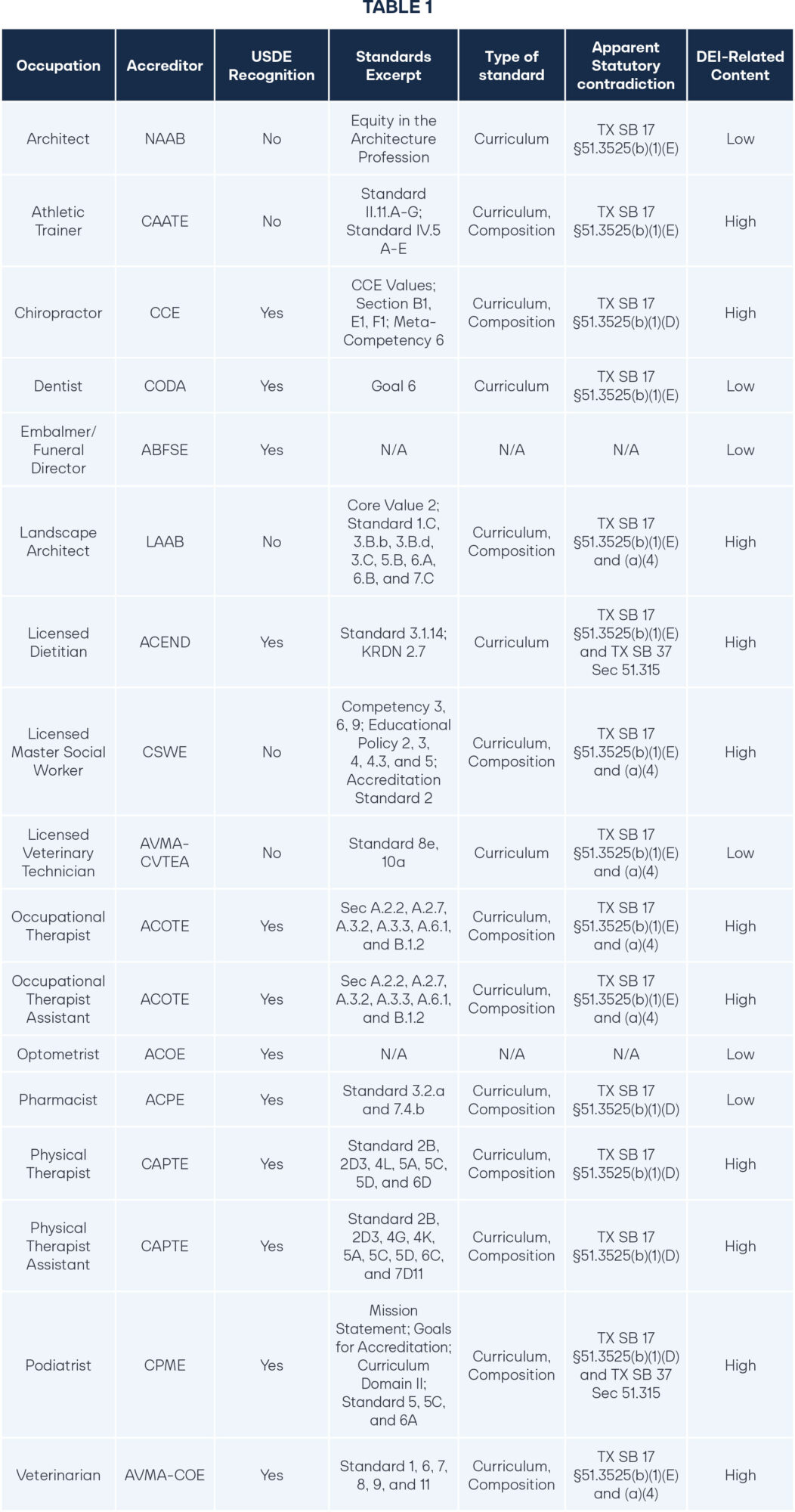
Table 1 showcases occupations controlled by SPAs in the state of Texas, ordered alphabetically by occupation. The table also includes each occupation’s programmatic accreditor, current DEI-related accreditation standard(s) and the apparent corresponding Texas statutory contradiction. To understand the DEI.related accreditation standard(s) better, the table highlights whether the standards are related to a program’s curriculum (classroom instruction and internship exposure) or composition (student and faculty makeup). Finally, the chart rates the DEI-standards high or low, as explained below.
DEI Standards Methodology
SPA accreditation standards were reviewed for occurrences of the terms “diversity,” “equity,” and “inclusion” within standards and substandards (excluding table of contents and glossary sections). Occupations were ranked by frequency of these terms. SPAs with more than 10 flagged terms were rated as high, and those with fewer than 10 were rated as low. Crucial to note, CSWE utilizes the term ADEI (anti.racism, diversity, equity, and inclusion) to refer to these concepts. Each time the term was used in standards counted for each of the flagged terms. Similarly, CAPTE utilizes the term JEDI (justice, equity, diversity, and inclusion), and this acronym was treated the same (Appendix C).
Standard-By-Standard Conflict Review
The analysis below examines educational programs governed by SPAs, highlighting those whose standards and requirements are in most apparent conflict with Texas law (Appendix D).
Licensed Master Social Worker (LMSW):
The Council on Social Work Education (CSWE) serves as the SPA for Licensed Master Social Workers in the state of Texas. Competency 3 of CSWE’s standards dictates how LMSWs must understand how racism and oppression shapes human experiences. More specifically, CSWE requires students to “understand the pervasive impact of White supremacy and privilege” and “understand how diversity and intersectionality shape human experiences and identity development and affect equity and inclusion.” Furthermore, Accreditation Standard 2.0 requires programs to engage in “specific and continuous efforts within the explicit curriculum related to anti-racism, diversity, equity, and inclusion.”25 CSWE’s standards appear to violate TX SB 17 §51.3525(b)(1)(E) and (a)(4), as they require extensive DEI-training for students.
Physical Therapist:
In Texas, the SPA for Physical Therapists is the Commission on Accreditation in Physical Therapy Education (CAPTE). Section 4G of the standards dictate that in choosing a program director, the individual “must demonstrate effective efforts to promote a culture of justice, equity, diversity, inclusivity (JEDI), belonging, and anti-racism as they relate to facility and students.”26 In addition, programs are required to describe how they support JEDI, belonging and anti-racism through recruitment and admissions policies. These standards appear to violate TX SB 17 §51.3525(b)(1)(D), which ban institutions from giving preferential treatment to any applicant or employee, on the basis of race, sex, color, ethnicity, or national origin.
Veterinarian:
In the state of Texas, the SPA for veterinarians is the American Veterinary Medical Association -Council on Education (AVMA-COE). Standard 1 of the AVMA-COE policies and procedures requires colleges to promote an institutional structure and climate that enhances diversity, equity, and inclusion. In addition, Standard 9g states that each student’s program of study must include opportunities to gain an understanding of “the important influences of diversity, equity, and inclusion in veterinary medicine, including the impact of implicit bias related to an individual’s personal circumstance on the delivery of veterinary medical services.”27 These standards appear to violate TX SB 17 §51.3525(b)(1)(E) and (a)(4), which prohibits required DEI-training for students in higher education.
The Impact of Outside Pressure on SPA’s DEI Standards
Table 1 highlights current accreditor standards, but does not display prior egregious DEI-related requirements for graduates. For example, the Commission on Dental Accreditation (CODA) removed all DEI-related practices and trainings after federal and state guidance on such matters. However, prior to this, CODA’s accreditation standards had strict policies regarding programs achieving the “appropriate level of diversity among its student, faculty, and staff.”28 Program efforts include “ongoing systematic and focused efforts to attract and retain students, faculty, and staff from diverse backgrounds”, evaluating “ comprehensive strategies to improve the institutional climate for diversity” and admissions policies with procedures “designed to include recruitment and admission of a diverse student population.” In addition, the standards stated that programs “must create an environment that ensures an in-depth exchange of ideas and beliefs across gender, racial, ethnic, cultural and socioeconomic lines.”29 All of these efforts directly applied diversity standards to hiring of faculty and staff, and admission of students. As these requirements no longer exist one can see the efficacy of outside pressure on some accreditors.
In contrast, the Council on Social Work Education (CSWE) illustrates the differential responses accreditors can have to federal and state pressure. CSWE’s accreditation standards were issued prior to SB 17 and SB 37, and are still enforced. These standards have embedded “anti-racism” and DEI curriculum throughout the framework. In May 2026, Do No Harm, a United States medical and policy advocacy group, sent a letter to CSWE demanding that the accreditor strip DEI requirements from its standards. Do No Harm argued that requiring students to understand “the impact of White supremacy” and to demonstrate “anti-racist social work practice” forces identity politics into every course in the curriculum. In response to this request, CSWE’s CEO Halaevalu Vakalahi refused to comply. In her response letter, Vakalahi noted that she does not believe Department of Education guidelines apply to CSWE.30 Instead of complying with Do No Harm’s request, CSWE doubled down on DEI education commitments, stating that CSWE remains “very committed to anti-racism.”31 In addition to CSWE’s CEO, a Field Education Coordinator from the University of North Texas’s Social Work Program noted that DEI is “definitely still a focus” and that the social work program is moving “forward with plans to expand its focus on DEI in its field instructor training.”32 This appears to directly violate SB17 and highlights how CSWE is encouraging programs to break local laws, not adhere to them.
Regulatory Capture of Programmatic Accreditors: Workforce Impacts in Texas
Scope of Licensed Professionals
SPAs have a large breadth of influence in the state of Texas. The 17 SPA-controlled professions analyzed in the report impact 183,230 Texan workers in licensed occupations. The true number of impacted professionals is actually substantially larger, as this report does not include all occupations overseen by the 15 SPAs named above.
For each occupation in Table 2, the number of individuals employed in that occupation, their primary work setting, and the occupation’s DEI material score is shown. Red indicates a DEI content high score, while yellow indicates a low score. The chart is ranked by the number of individuals employed in each occupation.
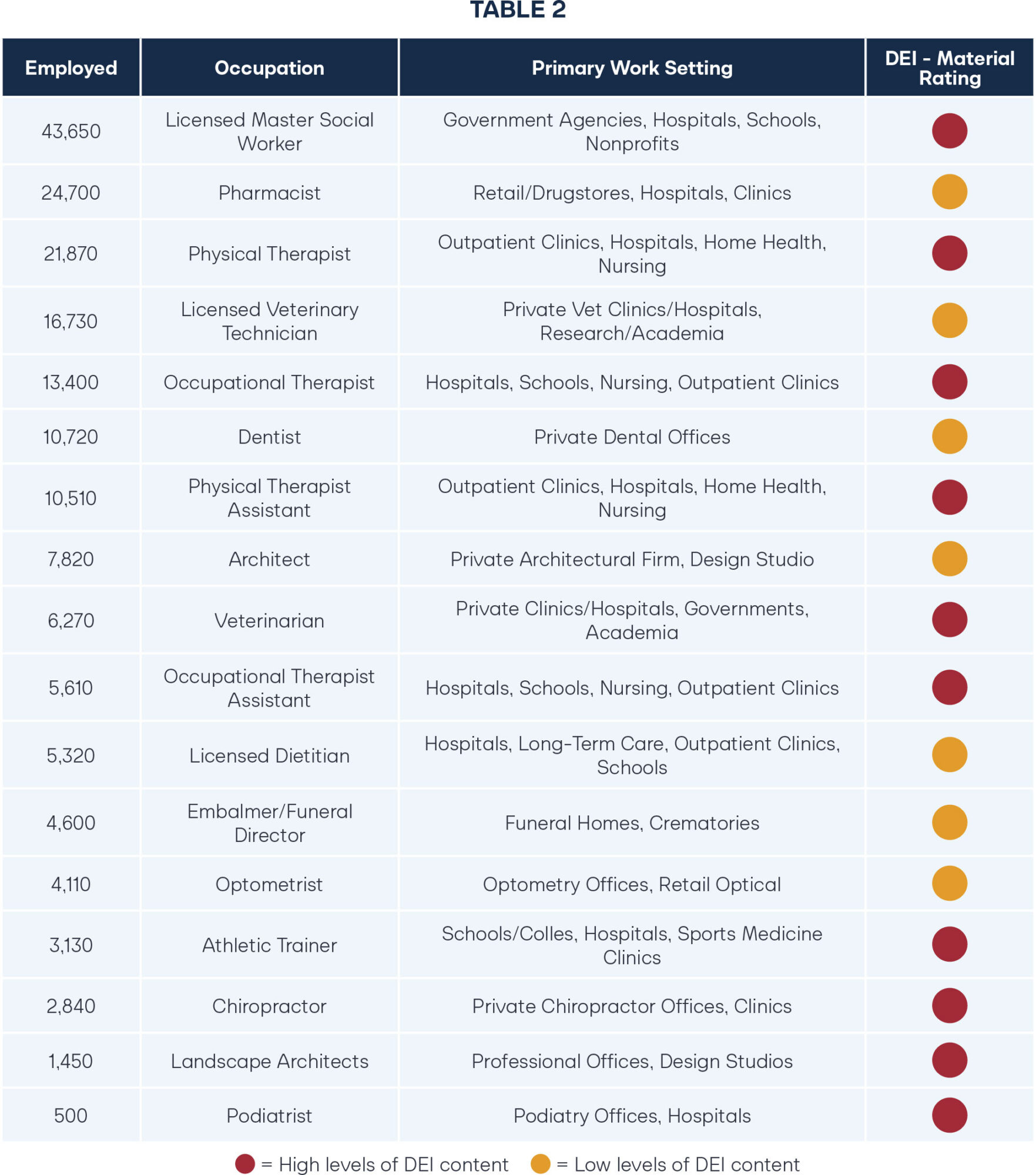
Table 2 illustrates the significant workforce impact that SPAs have on the state of Texas. From hospitals to government agencies, licensed professionals educated by SPAs span a wide range of work settings. Many of these work environments involve interacting with the most vulnerable populations in the state. The next section describes specifically how SPAs act to restrict access to occupations.
Degree Inflation and Workforce Shortages
The Intersection of Accreditation and Exams
Texas statutes and regulations impose occupational licensing exams to ensure that individuals have enough understanding in a field to complete their job safely and effectively. Many professional exams name a SPA in their education eligibility requirements, often including “or substantially similar” language to leave open the opaque possibility of an alternative accreditation option. Other occupational licensing exams explicitly require graduation from a SPA-accredited program with no alternatives permitted. These problems become especially potent when state law or regulation requires applicants for licensure to pass a particular exam created by a single national examination board.
For instance, 16 Tex. Admin. Code § 130.40 states that an applicant for a license to practice podiatry must pass all required sections of the American Podiatric Medical Licensing Examination (APMLE).33 According to the APMLE website (as of August 11, 2026), “Eligibility to take the APMLE is limited to students and graduates of colleges of podiatric medicine accredited by the Council on Podiatric Medical Education (CPME).”34 This means that the state’s exam requirement for podiatry licensure can serve as a backdoor to impose programmatic accreditation monopolies on a profession.
The Concealed Weapon: Degree Inflation
The field of physical therapy provides a stark example of the rapid surge in credential requirements for vital professions. In 1927, New York University launched the first four-year physical therapy bachelor of science program.35 The earliest effort to establish a two-year graduate program occurred in 1960 at Western Reserve University (later renamed to Case Western Reserve University). This program was ultimately phased out in the early 1970s; nevertheless, within two decades, the American Physical Therapy Association established December 31, 1990, as the target date for all of its physical therapy education programs to transition to a graduate degree.36,37
Just three years later, Creighton University inaugurated its Doctors of Physical Therapy (DPT) degree in September 1993, graduating its first class in 1996.38 By January 2016, CAPTE made a doctorate the required degree for all of its accredited entry-level physical therapist programs.39 In the span of under three decades, physical therapy transitioned from a baccalaureate degree to a doctorate.
Similar trends emerge in other professions, especially those controlled by a SPA. This degree inflation presents a multitude of challenges. Lengthened education timelines deprive aspiring workers of competitive salaries while simultaneously driving up student debt loads. This creates artificial workforce shortages and raises the cost of care. In healthcare professions, every additional year spent sitting in a classroom is a year not spent serving patients.
Topics Deserving Additional Research
Miscellaneous Licensure Mandates
Even beyond the occupational code, Texas statutes and regulations impose requirements for particular types of jobs to be performed by individuals whose license embeds a SPA’s accreditation standards on their education programs. For example, 26 TAC § 554.703 requires nursing facilities to employ or contract with a licensed social worker (nursing facilities with more than 120 beds must employ a licensed social worker).40 Many other legal requirements for critical functions such as child custody evaluations recognize Licensed Master Social Workers as one type of qualified individual from a limited range of options.41
In order to understand the full impact of programmatic accreditors on the workforce, the full extent of state licensure mandates to perform particular functions must first be understood. This is especially relevant when considering how ideological impositions by programmatic accreditors can impact highly vulnerable care recipients.
Professional Organization Affiliations
The AIM Committee’s recently proposed rulemaking would amend 34 CFR § 602.14 to “strengthen the fiscal and administrative criteria an accrediting agency must meet to prove it is fully separate and independent from any related, associated, or affiliated trade or membership organization.”42
For an illustration of the current relationships between professional organizations and the programmatic accreditors, consider the following facts regarding the American Veterinary Medical Association (AVMA), a professional organization, and the AVMA Council on Education (AVMA-COE), a programmatic accreditation monopoly embedded in the veterinarian licensing regimes of Texas and most other states.43
- As the name suggests, the AVMA-COE is an internal council of the AVMA.44 AVMA-COE’s own policies and procedures acknowledge “the AVMA as a parent organization of the AVMA COE.”45
- Per the AVMA’s own website, the AVMA states, “Our commitment is to advance the shared interests, values and goals of AVMA members, through a variety of avenues,” including through the “educational accreditation and certification programs” it provides.46
- Per the AVMA’s own website, “The AVMA provides the primary support staff for the Council on Education (COE).”47
- Per the AVMA’s own website, “The Council on Education shall consist of eight voting members of the Association and 12 members who are not required to be voting members of the Association.” The Association here refers to the AVMA. Only three members of the 20-member committee are required to be non-veterinarian members of the public.48
- Per the AVMA’s own website, the AVMA-COE “is largely funded by the AVMA and fees charged to colleges.”49
Medicaid/Medicare Requirements
Certain programmatic accreditors such as the Accreditation Council for Occupational Therapy Education (ACOTE) are named in the Code of Federal Regulations, which may prevent graduates from alternatively accredited programs from providing certain Medicare/Medicaid home health services.50 This in no way prevents states from taking immediate action to end state-imposed programmatic accreditation monopolies—on the contrary, state action would signal the need to remove these private entities from their current privileged status and reorient federal quality criteria towards state licensure.
Further research into all instances of federal statute, rules, and guidance that impose programmatic accreditation monopolies can elucidate the necessary federal actions to complement and maximize the impact of state-led reform.
Conclusion
Sole programmatic accreditors (SPAs) function as monopolistic gatekeepers to their respective occupations. In the absence of meaningful oversight from state laws and regulations, these entities have been able to consolidate and expand their authority rather than face constraint. This report identifies 15 SPAs that currently exercise unchecked influence over occupational licensure and education in Texas. Texas serves as an excellent case study for examining the broader impact SPAs can have on a state’s workforce and postsecondary education system.
SPAs, in conjunction with exam monopolies, generate a range of problems for which existing accountability mechanisms are inadequate. Their imposition of DEI requirements appear to put local occupation programs in direct conflict with state law, undermining the intent of SB 17 and SB 37. Additionally, the continuous degree inflation driven by SPAs not only puts a burden on program staff, but students looking to enter an occupation.
While further research is necessary to fully assess the impact of SPAs’ influence, the foundational findings presented in this report point to a central conclusion: the need for accountability. Legislators in Texas, and in all states across the country, should take action to hold SPAs accountable for noncompliance with state law and for practices that result in unwarranted degree inflation. Absent such accountability, this pattern risks establishing a poor precedent for postsecondary education in the United States of America.
Appendix A: Programmatic Accreditors in Texas Statutes and Regulations
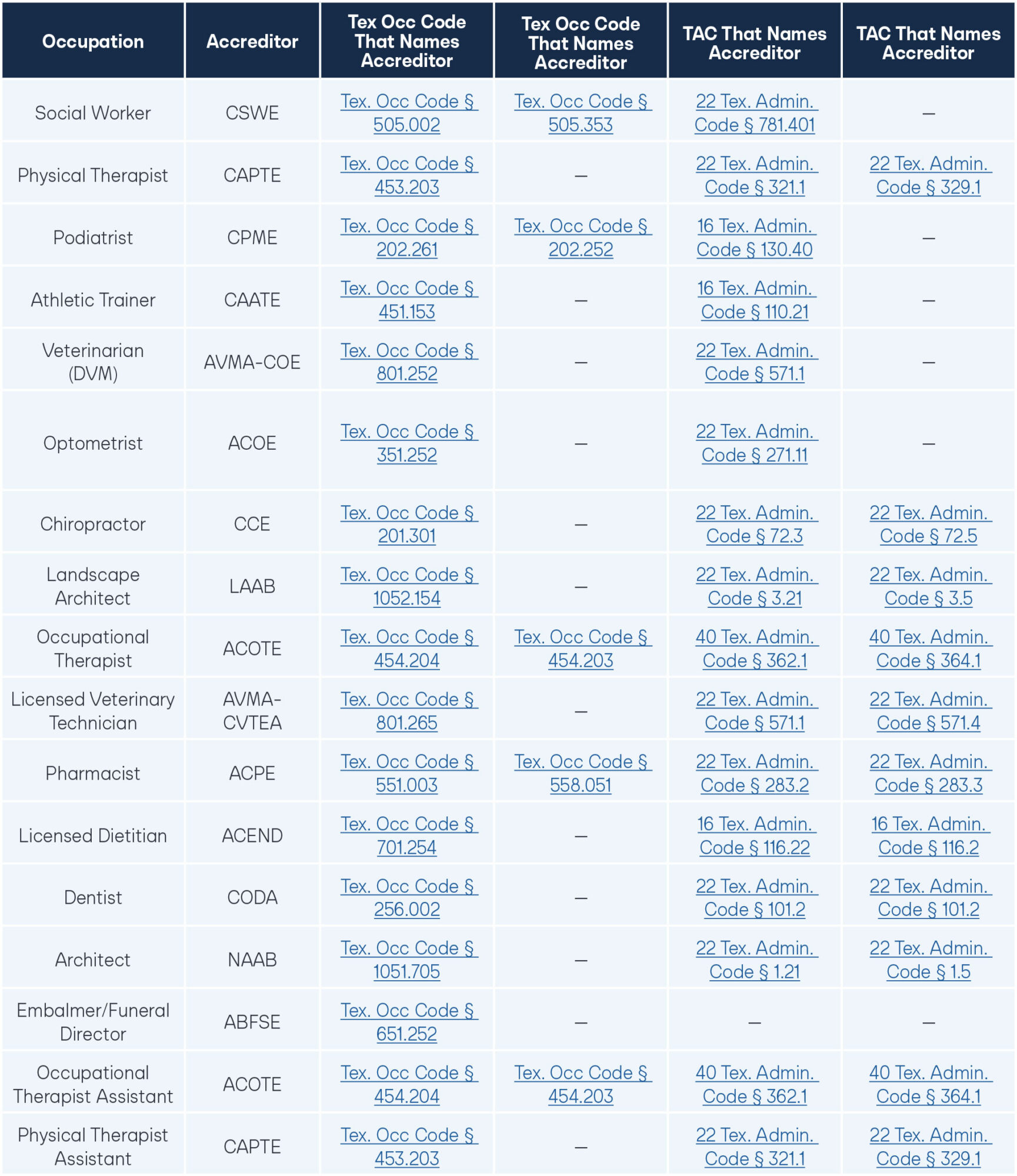
Appendix A highlights, for each occupation in the study, where education from a sole programmatic accreditor is required by Texas state law. Each requirement title is noted in the spreadsheet, along with a link.
Appendix B: Federal Action Against DEI Discrimination
Recent Federal Action Against DEI Discrimination
Within his first two weeks in office, President Trump signed two powerful executive orders relating to DEI in federally funded education. On January 20, 2025, President Trump signed Executive Order 14151: “Ending Radical and Wasteful Government DEI Programs and Preferencing.” This order eliminated DEI offices, programs, and mandates in the federal government. In addition, it directed agencies to remove DEI-based requirements in grants and contracts.51 The next day, President Trump also signed Executive Order 14173: “Ending Illegal Discrimination and Restoring Merit-Based Opportunity.”52 This order required recipients of federal funds to certify compliance with federal anti-discrimination law, and directed federal agencies to end discriminatory DEI practices in federally funded institutions. Both of these executive orders reshaped the requirements for institutions to receive federal funding, ensuring that they comply with the Trump administration’s restriction and elimination of DEI-related programs.
On February 14, 2025, the U.S. The Department of Education’s Office for Civil Rights issued a “Dear Colleague Letter.” This letter outlined Title VI of the Civil Rights Act in light of the Supreme Court’s decision in Students for Fair Admissions v Harvard. The letter stated that education institutions receiving federal funding could face increased federal scrutiny if they used race-conscious policies or DEI-related practices in areas such as admission, hiring, scholarships, discipline, and student programming.53 The Department argued that many DEI initiatives could constitute unlawful racial discrimination under federal civil rights law. This letter did not itself create new law, but sent a message to states and institutions on how to move forward with DEI practices.
Later that year, the U.S. Department of Justice issued a memorandum titled “Guidance for Recipients of Federal Funding Regarding Unlawful Discrimination” on July 29, 2025. The memorandum argued that federally funded entities could face legal risk if they maintained policies or standards that distinguished individuals based on protected characteristics such as race or sex.54 Specifically, this memorandum scrutinized many DEI-related practices, echoing the “Dear Colleague Letter” published in February 2025. One month after the U.S. Department of Justice issued their memorandum on DEI-related practices, the Commission on Dental Accreditation (CODA) announced that it would suspend accreditation standards related to diversity among faculty, students, and staff.55 The report of CODA’s August 2025 meeting stated this decision was “in response to the memorandum released by the Attorney General of the United States of America on July 29, 2025.”56
Appendix C: TX Programmatic Accreditor DEI Standard Analysis
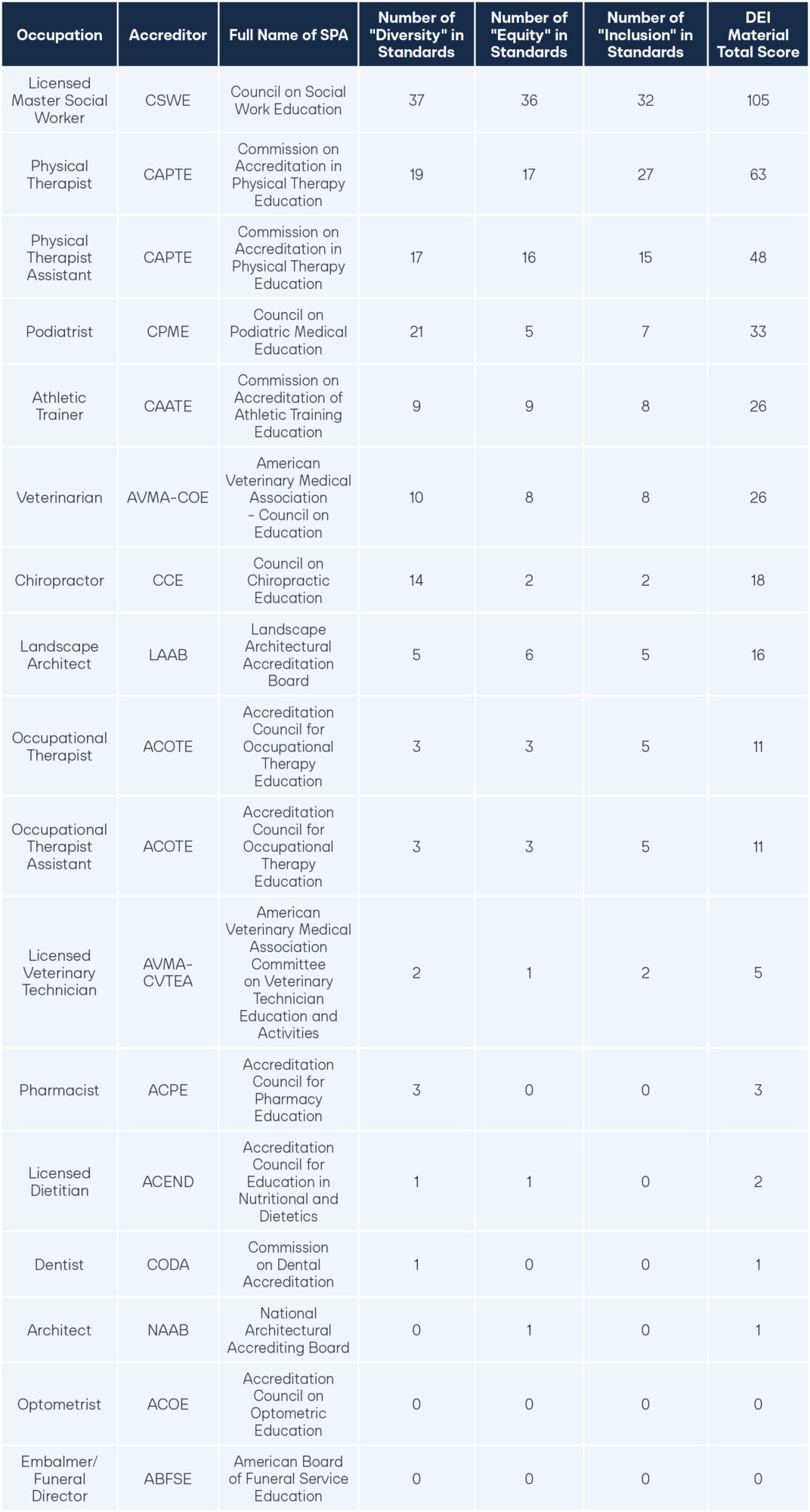
The following table provides a comprehensive summary of Texas’ fifteen sole programmatic accreditors referenced in this paper. The table details occupations, the corresponding accreditors, and DEI material scores as of May 2026.
To assess DEI-related requirements across sole accreditors, SPA accreditation standards were reviewed for occurrences of the terms “diversity,” “equity,” and “inclusion” within standards and substandards (glossary sections excluded). Occupations were ranked by frequency of these terms. SPAs with more than 10 flagged terms were rated as high, and those with fewer than 10 were rated as low. Crucial to note, CSWE utilizes the acronym ADEI (anti-racism, diversity, equity, and inclusion) to refer to these concepts. Each time the acronym was used in standards counted for each of the flagged terms. Similarly, CAPTE utilizes the term JEDI (justice, equity, diversity, and inclusion), and this acronym was treated the same. PDFs of accreditor standards can be found here.
Appendix D: Texas Sole Accreditor DEI Standards Catalog
The following appendix compiles DEI-related requirements drawn directly from the accrediting bodies identified in this paper. Each accreditor’s DEI-related requirements are excerpted in Appendix D.
Texas Sole Accreditor DEI Catalog – Source Link Here
Architect
Name of Accreditor: National Architectural Accrediting Board
DEI Standard Excerpts/ Type of Standard:
- Equity in the Architecture Profession / Curriculum
- “Architects commit to fostering equitable opportunities and access for all in the profession, avoiding discrimination, and showing respect for the differences in the people and contexts we serve, in the environments we design, the words we speak, the actions we take, and the respectful learning, teaching, and working environments we create in the profession and in society. This includes support for a range of pathways for students seeking access to an architecture education” (Page 1).
Athletic Trainer
Name of Accreditor: Commission on Accreditation of Athletic Training Education
DEI Standard Excerpts/ Type of Standard:
- Standard II. 11.A-G / Curriculum and Composition
- “The program demonstrates systematic diversity, equity, inclusion and social justice efforts in its development, design and delivery. Programs advance diversity, equity, inclusion, and social justice through a variety of efforts. These can include (but are not limited to) the following:
- participating in institutional efforts to advance diversity, equity, inclusion and social justice;
- incorporating diversity, equity, inclusion and social justice across the program curriculum;
- recruiting and retaining diverse faculty, students, and preceptors;
- improving faculty and preceptors understanding and integration of diversity, equity, inclusion, and social justice;
- implementing policies that support a climate of equity and inclusion, free of harassment and discrimination;
- community engagements and/or scholarly endeavors (opportunities) that are reflective of diversity, equity, inclusion, and social justice; and
- gathering program data that informs the programs diversity, equity, inclusion, and social justice efforts. Sources may include, but are not limited to, demographic reports, retention reports, equity analysis, climate data, participation in DEI activities, competency development, program evaluations, and interviews/focus group data” (Page 10).
- “The program demonstrates systematic diversity, equity, inclusion and social justice efforts in its development, design and delivery. Programs advance diversity, equity, inclusion, and social justice through a variety of efforts. These can include (but are not limited to) the following:
- Standard IV.5A-E / Curriculum
- “Practice cultural competency, foster cultural humility, and demonstrate respect in client/patient care. This includes (but is not limited to) the following:
- Using contemporary nomenclature of various identities.
- Analyzing the impact of group identification, including the intersectionality of multiple identities, on health disparities, patient care, and patient outcomes.C Analyzing the impact of marginalization on health disparities, patient care, and patient outcomes.D Developing strategies that minimize the impact of clinician based bias, prejudice, and privilege on patient interactions.
- Devising patient-centered interventions to diverse populations that account for the healthcare delivery system” (Page 28).
- “Practice cultural competency, foster cultural humility, and demonstrate respect in client/patient care. This includes (but is not limited to) the following:
Chiropractor
Name of Accreditor: Council on Chiropractic Education
DEI Standard Excerpts/ Type of Standard:
- CCE Values / Curriculum and Composition
- “Cultivation and support of an environment that demonstrates commitment to diversity, equity, and inclusion” (Page iv).
- Section B1 / Curriculum / Active
- “Ethics are evident in the conduct of all members of a DCP as they strive to fulfill the mission and graduate doctors of chiropractic/chiropractic physicians capable of, and committed to, practicing in an ethical and professional manner. Policies and procedures include those related to codes of conduct and grievance procedures; academic freedom; sensitivity to equity, discrimination, and diversity issues; safety and welfare of the academic community and patients in administering healthcare to the public; and provisions of assistance and mechanisms to promote student academic and professional success” (Page 14).
- Section E1 / Composition
- “The policies, procedures, and practices of the DCP promote diversity within the faculty” (Page 16).
- Section F1 / Composition
- “The program ensures a welcoming, supportive, and encouraging learning environment for all students, including students with diverse backgrounds and from underrepresented communities” (Page 16).
- Meta-Competency 3 / Curriculum
- “Explain the major causes and trends in chronic disease, comorbidity, and mortality, including those for patients from diverse backgrounds and from underrepresented communities…recognize the importance of social determinants and impact of health care disparities within diverse populations” (Page 22).
- Meta-Competency 6 / Curriculum
- “Cultural competency includes the knowledge, skills, and core professional attributes needed to provide care to patients with diverse values, beliefs, and behaviors, including the tailoring of health care delivery to meet patients’ social, cultural, and linguistic needs in an effort to reduce disparities in healthcare delivery. The program prepares students to:
- demonstrate an awareness of biases and social determinants of health that may impact the delivery of care to a diverse population.
- evaluate the role of sociocultural, socioeconomic, and diversity factors in contemporary society to meet the healthcare needs of persons, groups, and populations” (Page 23).
- “Cultural competency includes the knowledge, skills, and core professional attributes needed to provide care to patients with diverse values, beliefs, and behaviors, including the tailoring of health care delivery to meet patients’ social, cultural, and linguistic needs in an effort to reduce disparities in healthcare delivery. The program prepares students to:
Dentist
Name of Accreditor: Commission on Dental Accreditation
DEI Standard Excerpts/ Type of Standard:
- Goal 6 / Curriculum
- “Utilize the values of professional ethics, lifelong learning, patient centered care, adaptability, and acceptance of cultural diversity in professional practice (Page 8).
Embalmer/Funeral Director
Name of Accreditor: American Board of Funeral Service Education
DEI Standard Excerpts/ Type of Standard:
- ABFSE has no DEI related training requirement, curriculum mandates, or quotas for the hiring of staff or acceptance of students.
Landscape Architect
Name of Accreditor: Landscape Architectural Accreditation Board
DEI Standard Excerpts/ Type of Standard:
- Core Value 2 / Curriculum
- “Landscape architects, through their professional undertakings and products, strive to create and maintain an inclusive and welcoming climate that embraces differences, offers respect in words and actions, displays cultural sensitivity and competence, and values all people and their perspectives as essential for the health and well-being of diverse individuals and communities” (Page 3).
- Standard 1.C / Curriculum
- “The professional program shall demonstrate—through concrete steps—systematic, coherent, and long-term efforts to incorporate diversity, equity, and inclusion through its program. The professional program shall provide a learning environment that prepares students with a broad range of cultural competencies to navigate a diverse professional world” (Page 5).
- Standard 3.B.b / Curriculum
- “Histories and Theories of the Art and Science of Landscape Architecture, i.e., built and natural environment, and urban, community, and ecological planning and design, framed by diverse social, cultural, economic, political, and scientific forces in North America and globally” (Page 10).
- Standard 3.B.d / Curriculum
- “Resilience, i.e., the social, human, economic, and environmental principles of sustainability and resilience; landscape performance categories, metrics, and methodologies; and the use of behavioral sciences to assess the impacts of design within diverse social, human, economic, and environmental systems” (Page 10).
- Standard 3.C / Curriculum
- “The professional program shall provide students with an understanding of the role of the community in the profession and the profession in the community, the changing culture and environment of the profession, and competency regarding diversity, equity, and inclusion” (Page 16).
- Standard 5.B / Curriculum
- “Faculty members participate in a range of ongoing professional development opportunities, such as: career development; emerging issues in the profession; and diversity, equity, inclusion, and cultural competency” (Page 17).
- Standard 6.A / Curriculum
- “The professional program interacts with the institution to build awareness of the program; and to interact with local, diverse, and historically underserved communities, and with the general public at large, to advance knowledge and understanding of landscape architecture; all in a way that builds students’ cultural competence during their educational career” (Page 19)
- Standard 6.B / Composition
- “The professional program engages with alumni and practitioners in a way that reflects, supports, and promotes diversity, equity, and inclusion, assists in the recruitment of students with diverse backgrounds, and provides students with experiences that expand their cultural competence for interacting with diverse communities” (Page 19).
- Standard 7.C / Composition
- “Collections are adequate to support the professional program and include access to a broad cross-section of publications, periodicals, research, and other materials that reflect the diverse social, cultural, economic, political, and scientific forces that shape the art and science of landscape architecture” (Page 20).
Licensed Dietician
Name of Accreditor: Accreditation Council for Education in Nutritional and Dietetics
DEI Standard Excerpts/ Type of Standard:
- Standard 3.1.14 / Curriculum
- “The program’s curriculum must include…Food science and food systems, food safety and sanitation, environmental sustainability, global nutrition, principles and techniques of food preparation and development , modification and evaluation of recipes, menus and food products acceptable to diverse populations” (Page 9).
- KRDN 2.7 / Curriculum
- “Describe contributing factors to health inequity in nutrition and dietetics” (Page 10).
Licensed Master Social Worker
Name of Accreditor: Council on Social Work Education
DEI Standard Excerpts/ Type of Standard:
- Competency 3 / Curriculum
- “Social workers understand how racism and oppression shape human experiences and how these two constructs influence practice at the individual, family, group, organizational, and community levels and in policy and research. Social workers understand the pervasive impact of White supremacy and privilege and use their knowledge, awareness, and skills to engage in anti-racist practice. Social workers understand how diversity and intersectionality shape human experiences and identity development and affect equity and inclusion. The dimensions of diversity are understood as the intersectionality of factors including but not limited to age, caste, class, color, culture, disability and ability, ethnicity, gender, gender identity and expression, generational status, immigration status, legal status, marital status, political ideology, race, nationality, religion and spirituality, sex, sexual orientation, and tribal sovereign status” (Page 9).
- Competency 6 / Curriculum
- “Social workers are self-reflective and understand how bias, power, and privilege as well as their personal values and personal experiences may affect their ability to engage effectively with diverse clients and constituencies” (Page 11).
- Competency 9 / Curriculum
- “Social workers understand that evaluation is an ongoing component of the dynamic and interactive process of social work practice with and on behalf of diverse individuals, families, groups, organizations, and communities. Social workers evaluate processes and outcomes to increase practice, policy, and service delivery effectiveness. Social workers apply anti-racist and anti-oppressive perspectives in evaluating outcomes” (Page 12).
- Educational Policy 2.0 / Curriculum
- “Social work programs integrate anti-racism, diversity, equity, and inclusion (ADEI) approaches across the curriculum. Programs provide the context through which students learn about their positionality, power, privilege, and difference and develop a commitment to dismantling systems of oppression, such as racism, that affect diverse populations. Programs recognize the pervasive impact of White supremacy and privilege and prepare students to have the knowledge, awareness, and skills necessary to engage in anti-racist practice. The dimensions of diversity, equity, and inclusion are understood as the intersectionality of multiple factors including but not limited to age, caste, class, color, culture, disability and ability, ethnicity, gender, gender identity and expression, generational status, immigration status, legal status, marital status, political ideology, race, nationality, religion/spirituality, sex, sexual orientation, and tribal sovereign status” (Page 16).
- Accreditation Standard 2.0 / Curriculum
- “The program engages in specific and continuous efforts within the explicit curriculum related to anti-racism, diversity, equity, and inclusion…The program engages in specific and continuous efforts within the implicit curriculum related to anti-racism, diversity, equity, and inclusion” (Page 16).
- Educational Policy 3.0 / Curriculum
- “Social work education is grounded in the liberal arts and a commitment to anti-racism, diversity, equity, and inclusion, which together provide the intellectual basis for the professional curriculum and inform its design. The integration of anti-racism, diversity, equity, and inclusion principles across the explicit curriculum includes anti-oppression and global positionality, interdisciplinary perspectives, and comparative analysis regarding policy, practice, and research” (Page 17).
- Educational Policy 4.0 / Curriculum
- “All elements of the implicit curriculum are expected to demonstrate the program’s commitment to anti-racism, diversity, equity, and inclusion (ADEI). The culture of human interchange, the spirit of inquiry, the support for difference and diversity, and the values and priorities in the educational environment, including the field setting, inform the student’s learning and development” (Page 24).
- Educational Policy 4.3 / Composition
- “Faculty and administrators exercise autonomy in designing an administrative and leadership structure that reflects and affirms respect for anti-racism, diversity, equity, and inclusion” (Page 29).
- Educational Policy 5.0 / Assessment
- “Assessment involves the systematic gathering of data that serve as evidence of student learning outcomes; anti-racism, diversity, equity, and inclusion (ADEI); and program outcomes through demonstration of the nine social work competencies at both the generalist and specialized levels of practice” (Page 36).
Licensed Veterinary Technician
Name of Accreditor: American Veterinary Medical Association Committee on Veterinary Technician Education and Activities
DEI Standard Excerpts/ Type of Standard:
- Section 8e / Curriculum
- “The program must promote a learning environment that values diversity, equity, inclusion, and belonging.”
- Section 10a/ Curriculum
- “Opportunities should exist throughout the curriculum for students to gain an understanding of the important influences of diversity and inclusion in veterinary medicine.”
Occupational Therapist
Name of Accreditor: Accreditation Council for Occupational Therapy Education
DEI Standard Excerpts/ Type of Standard:
- Section A.2.2. / Curriculum
- “Knowledge of the curriculum design, application of principles of diversity, equity, inclusion, and justice concepts and the content delivery method” (Page 4).
- Section A.2.7. / Composition
- “The faculty must be reflective of institutional recruitment and hiring policies regarding diversity, equity, inclusion, and justice” (Page 8).
- Section A.3.2. / Composition
- “The admissions process must align with the institutional mission and vision and reflect efforts to recruit and admit a diverse student population as defined by the program” (Page 11).
- Section A.3.3. / Composition
- “The program must describe how retention practices support the needs of its diverse student population to complete the program” (Page 12).
- Section A.6.1. / Curriculum
- “The program must document a current strategic plan that articulates the program’s future vision and scholarship agenda, which guides the program (e.g., faculty recruitment and professional growth; scholarship; changes in the curriculum design; priorities in academic resources; procurement of fieldwork and doctoral capstone sites; vision for diversity, equity, inclusion, and justice)” (Page 18).
- Section B.1.2. / Curriculum
- “Apply and analyze the role of sociocultural, socioeconomic, and diversity, equity, and inclusion factors, as well as lifestyles in contemporary society to meet the needs of persons, groups, and populations. Course content must include, but is not limited to, introductory psychology, abnormal psychology, and introductory sociology or introductory anthropology” (Page 22).
Occupational Therapist Assistant
Name of Accreditor: Accreditation Council for Occupational Therapy Education
DEI Standard Excerpts/ Type of Standard:
- Section A.2.2. / Curriculum
- “Knowledge of the curriculum design, application of principles of diversity, equity, inclusion, and justice concepts and the content delivery method” (Page 4).
- Section A.2.7. / Composition
- “The faculty must be reflective of institutional recruitment and hiring policies regarding diversity, equity, inclusion, and justice” (Page 8).
- Section A.3.2. / Composition
- “The admissions process must align with the institutional mission and vision and reflect efforts to recruit and admit a diverse student population as defined by the program” (Page 11).
- Section A.3.3. / Composition
- “The program must describe how retention practices support the needs of its diverse student population to complete the program” (Page 12).
- Section A.6.1. / Curriculum
- “The program must document a current strategic plan that articulates the program’s future vision and scholarship agenda, which guides the program (e.g., faculty recruitment and professional growth; scholarship; changes in the curriculum design; priorities in academic resources; procurement of fieldwork and doctoral capstone sites; vision for diversity, equity, inclusion, and justice)” (Page 18).
- Section B.1.2. / Curriculum
- “Apply and analyze the role of sociocultural, socioeconomic, and diversity, equity, and inclusion factors, as well as lifestyles in contemporary society to meet the needs of persons, groups, and populations. Course content must include, but is not limited to, introductory psychology, abnormal psychology, and introductory sociology or introductory anthropology” (Page 22).
Optometrist
Name of Accreditor: Accreditation Council on Optometric Education
DEI Standard Excerpts/ Type of Standard:
- ACOE has no DEI related training requirement, curriculum mandates, or quotas for the hiring of staff or acceptance of students.
Pharmacist
Name of Accreditor: Accreditation Council for Pharmacy Education
DEI Standard Excerpts/ Type of Standard:
- Standard 3.2.a / Curriculum
- “In the aggregate, APPEs expose students to diverse populations that include age; gender; neurodivergent, race/ethnicity, and socioeconomic factors; and disease states” (Page 11).
- Standard 7.4.b / Composition
- “ The college or school regularly assesses the criteria, policies, and procedures to ensure the selection of a qualified student body, members of which have the potential for academic success and the ability to practice in team-centered and culturally diverse environments” (Page 24).
Physical Therapist
Name of Accreditor: Commission on Accreditation in Physical Therapy Education
DEI Standard Excerpts/ Type of Standard:
- Standard 2B/ Curriculum
- “The program promotes a culture of justice, equity, diversity, inclusivity (or JEDI), belonging, and anti-racism…Describe how the program’s mission, goals, and outcomes align with promoting a culture of JEDI, belonging, and anti-racism…Describe the data collected, or that will be collected, to determine the extent to which the program promotes a culture of JEDI, belonging and anti-racism” (Page 5).
- Standard 2D3/ Composition
- “Describe how the collective core, associated, and clinical education faculty is sufficient in number and expertise to meet all program and curricular needs and is aligned with the program outcomes related to … JEDI, belonging, and anti-racism” (Page 8).
- Standard 4L / Composition
- “Describe how the director of clinical education fosters a culture that promotes JEDI, belonging, and anti-racism in the clinical environment” (Page 33).
- Standard 5A / Composition
- “Describe how the program supports JEDI, belonging, and anti-racism through its recruitment and admissions policies, procedures, and/or practices” (Page 37).
- Standard 5C / Curriculum
- “The program has written policies, procedures, and practices that address the rights, responsibilities, safety, privacy, and dignity of program students and are applied consistently and equitably as students progress through the program…Describe how the program supports JEDI, belonging, and anti-racism through its program policies, procedures, and/or practices that address the rights, responsibilities, safety, privacy, and dignity of program students” (Page 39).
- Standard 5D / Composition
- “The program has written policies, procedures, and practices that address remediation and dismissal while optimizing student success and retention. Describe how the program supports JEDI, belonging, and anti-racism through its program policies, procedures, and practices related to remediation, retention, and dismissal” (Page 39).
- Standard 6D / Curriculum
- “The curriculum includes health care disparities, social determinants of health and JEDI, belonging, and anti-racism” (Page 43).
Physical Therapist Assistant
Name of Accreditor: Commission on Accreditation in Physical Therapy Education
DEI Standard Excerpts/ Type of Standard:
- Standard 2B/ Curriculum
- “The program promotes a culture of justice, equity, diversity, inclusivity (or JEDI), belonging, and anti-racism…Describe how the program’s mission, goals, and outcomes align with promoting a culture of JEDI, belonging, and anti-racism…Describe the data collected, or that will be collected, to determine the extent to which the program promotes a culture of JEDI, belonging and anti-racism” (Page 5).
- Standard 2D3/ Composition
- “Describe how the collective core, associated, and clinical education faculty is sufficient in number and expertise to meet all program and curricular needs and is aligned with the program outcomes related to … JEDI, belonging, and anti-racism” (Page 7).
- Standard 4G / Composition
- “Describe the effectiveness of the program director in promoting a culture of JEDI, belonging, and anti-racism as they relate to faculty, staff, students, and other stakeholders” (Page 23).
- Standard 4K / Composition
- “Describe how the DCE/ACCE fosters a culture that supports JEDI, belonging, and anti-racism in the clinical environment” (Page 26).
- Standard 5A / Composition
- “Describe how the program supports JEDI, belonging, and anti-racism through its recruitment and admissions policies, procedures, and/or practices” (Page 29).
- Standard 5C / Curriculum
- “The program has written policies, procedures, and practices that address the rights, responsibilities, safety, privacy, and dignity of program students and are applied consistently and equitably as students progress through the program…Describe how the program supports JEDI, belonging, and anti-racism through its program policies, procedures, and/or practices that address the rights, responsibilities, safety, privacy, and dignity of program students” (Page 31).
- Standard 5D / Composition
- “Describe how the program supports JEDI, belonging, and anti-racism through its program policies, procedures, and practices related to remediation, retention, and dismissal.” (Page 31).
- Standard 6C / Curriculum
- “The curriculum includes health care disparities, social determinants of health and JEDI, belonging, and anti-racism” (Page 35).
- Standard 7D11 / Curriculum
- “Provide physical therapy services that address… JEDI, belonging, and anti-racism” (Page 45).
Podiatrist
Name of Accreditor: Council on Podiatric Medical Education
DEI Standard Excerpts/ Type of Standard:
- Mission Statement / Composition
- “ The Council recognizes, values, and promotes diversity, equity, and inclusion within the faculty, staff, and students at the colleges of podiatric medicine. The Council strives to reflect membership diversity of race, ethnicity, religion, national origin, age, gender identity, sexual orientation, disability, and experience” (Page 3).
- Goals for CPME Accreditation / Curriculum
- “Encourage colleges to achieve diversity, equity, inclusion, cultural humility, and interprofessional collaboration among their administration, students, faculty, and staff” (Page 6).
- Curriculum Domain II / Curriculum
- “Provide effective and compassionate patient-centered care (with emphasis on the lower extremity) that promotes overall health to diverse populations. Exhibit cultural awareness to ensure that the patient and the patient’s family are provided the highest quality of care that demonstrates respect for diverse cultures” (Page 18).
- Structure of Curriculum / Curriculum
- Programs must describe “ How has the college addressed diversity, equity, and inclusion at the institution through its academic and clinical education? For example, training in medical racism, health inequities, and implicit bias” (Page 21).
- Standard 5: Faculty/ Composition
- “A faculty that reflects the diverse demographic characteristics of the population can help to overcome educational barriers and provide incentives for enrollment, matriculation, and achievement of students from diverse demographic groups. The policies, procedures, and practices of a college should encourage the inclusion of faculty members who contribute to the diversity of the faculty complement” (Page 25).
- Standard 5C/ Composition
- “Diversity is present within the faculty to ensure that appropriate role models are available to students. What percentage of the faculty are members of an underrepresented minority? • What percentage of the faculty are women? • Are appropriate role models present for student mentoring? • What is the educational background (undergraduate, graduate, and residency) of the faculty and does the composition of the faculty demonstrate diversity? • What has the institution done to promote diversity (e.g., proactive hiring practices, student involvement, and inclusion of diversity training in the curriculum)? • Has the college included diversity, equity, and inclusion within its standard protocols including its policies, practices, and procedures” (Page 27).
- Standard 6A / Composition
- “Description of policies, procedures, and plans to achieve a diverse student population” (Page 32).
Veterinarian
Name of Accreditor: American Veterinary Medical Association – Council on Education
DEI Standard Excerpts/ Type of Standard:
- Standard 1 / Curriculum and Composition
- “The college must have and follow a statement on diversity, equity, and inclusion, consistent with applicable law. The college must create and promote an institutional structure and climate that does not discriminate and seeks to enhance diversity, equity, and inclusion, consistent with applicable law. Diversity may include, but is not limited to, race, color, religion, ethnicity, age, gender, gender identity, sexual orientation, first language, cultural and socioeconomic background, national origin, tribal membership, citizen status, and disability” (Page 21).
- Standard 6 / Composition
- “Student support services must be available, accessible, and publicized within the college or university…These must include, but are not limited to, appropriate services to support student wellness and to assist with meeting the academic and personal challenges of the DVM program; support for students with learning or other disabilities; support of diversity, equity, and inclusion awareness programs for students; and support of extra-curricular activities relevant to veterinary medicine and professional growth” (Page 24).
- Standard 7 / Composition
- “The college must demonstrate its commitment to diversity, equity, and inclusion through its recruitment and admission processes, as consistent with applicable law. Such initiatives should include programs that promote achieving diversity among qualified applicants for veterinary college admission. The college must review its admissions processes at least every seven years, including identifying and reducing barriers in the application process” (Page 25).
- Standard 8 / Composition
- “The college must cultivate a diverse faculty through its hiring policies and retention practices, consistent with applicable law” (Page 25).
- Standard 9 / Composition
- “Opportunities throughout the curriculum for students to gain and integrate an understanding of the important influences of diversity, equity, and inclusion in veterinary medicine,including the impact of implicit bias related to an individual’s personal circumstance on the delivery of veterinary medical services” (Page 26).
- Standard 11 / Assessment
- “The college must have processes in place whereby students are observed and assessed formatively and summatively, with timely documentation to assure accuracy of the assessment for having attained the following competencies…8) ethical and professional conduct, including the knowledge, skills, and core professional attributes needed to provide culturally competent veterinary care in a multidimensional and diverse society; communication skills; including those that demonstrate an understanding and sensitivity to how diversity and individual circumstance impact veterinary care” (Page 27).

Stay Informed
Sign up to receive updates about our fight for policies at the state level that restore liberty through transparency and accountability in American governance.