Los Angeles Spent Billions on Homelessness. Where’d the Money Go?
Federal fraud charges expose a sprawling system built to spend taxpayer dollars without having to show results. Congress has an opportunity to fix it.

At the beginning of October, federal law enforcement arrested 28 alleged drug dealers in a sweep of Los Angeles’s Skid Row, a notorious haven for drug use among the homeless. But dealers, as the feds correctly recognize, are far from the only people profiting at the expense of LA’s homeless population.
A few weeks earlier, in the same city, authorities revealed that taxpayer dollars meant to house homeless people allegedly helped finance a nightclub, a bingo hall, luxury vacations, and vintage car restorations.
Prosecutors say Michael Young, founder of the homelessness nonprofit Home at Last, diverted more than $7.5 million through sham vendors. His organization received more than $118 million in taxpayer money, including more than $75 million through the Los Angeles Homeless Services Authority, or LAHSA. Young faces federal wire fraud charges.
Employees from two other LA-based homelessness nonprofits were also charged. These arrests stem from the plea agreement of Alexander Soofer, who ran yet another LA homelessness nonprofit, Abundant Blessings, which obtained $23 million in public funds. He got caught paying bribes, submitting fake invoices, and charging the state rent on properties that he secretly owned, among other things.
The triple fraud bust came on the same day a federal appeals court cleared the way for the Department of Housing and Urban Development to proceed with improvements to its roughly $4 billion Continuum of Care program that will prioritize accountability and results.
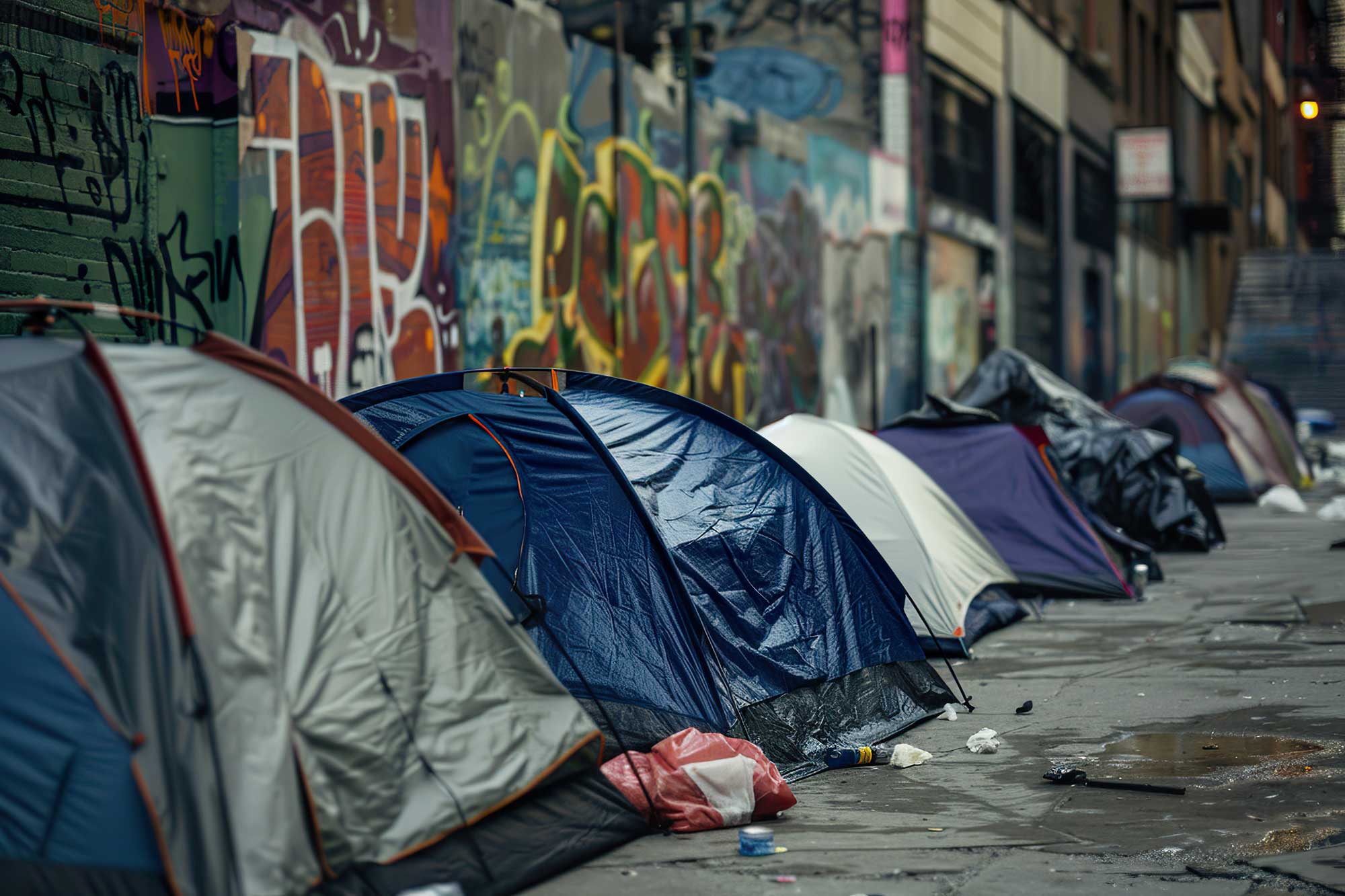
The revelations out of Los Angeles help explain why federal investigators are following the money, and HUD is reconsidering how to spend it. No other jurisdiction in the country receives more federal dollars to combat homelessness, and yet roughly 70,000 people remain homeless across LA County, including 44,000 people sleeping outside.
Last month, I testified before the U.S. House’s Delivering on Government Efficiency subcommittee as it examined waste, fraud, and abuse in LA’s homelessness system, with particular scrutiny on LAHSA, which recently voted not to seek renewal of its Continuum of Care leadership role, given controversies surrounding its lack of oversight.
To put it mildly, LAHSA is a bureaucratic mess. In 2024, LA County found LAHSA had advanced $50.8 million to providers without formal repayment agreements, recovering just $2.5 million by the following July. A court-ordered assessment found inconsistent contract and bed records, and little verification that billed services had actually been delivered. In L.A., you don’t have to be a gang member or drug dealer to prey on the homeless.
LAHSA’s own former CEO faced questions over $2.1 million in contracts bearing her signature with a nonprofit employing her husband, despite publicly stating she was recused from such dealings.
A 2026 county review found LAHSA could not provide complete financial statements, failed to properly record $145.1 million in advances, and made duplicate entries overstating cash by $47.2 million. Months later, the chair of LAHSA’s own audit committee said the agency had not completed an internal audit in several years.
We need to hold these bad actors accountable, but we can’t stop there. We have to ask: What parts of the homelessness system allowed them to exploit it in the first place?
For starters, complexity is corruption’s best friend. The bigger and more complicated a system becomes, the more opportunities there are for money to disappear and the harder it becomes to figure out who’s to blame.
In LA, hundreds of millions of tax dollars flow annually through LAHSA to a network of more than 100 nonprofits, creating a maze of contracts, funding streams, and oversight bodies. And LA is hardly unique. The federal CoC program has institutionalized this complexity nationwide, channeling billions of dollars through local agencies and service providers, creating layers that obscure what’s spent where, and who is accountable for results. Across the country, this system creates conditions ripe for waste and fraud.
On top of that, it focuses on the wrong results. In its current state, our nation’s homelessness system tracks activity: beds available, staff hired, outreach conducted, and dollars spent. The system is very good at proving it’s busy. It is much less good at delivering desirable outcomes.
The ultimate measure should be much simpler: Are fewer people homeless?
Thankfully, the current administration is reversing the failed policies of the past and directing tax dollars toward programs that can prove they are moving people toward stability and self-sufficiency. Congress and state lawmakers now have an opportunity to join that effort — to simplify the Continuum of Care system and connect federal funding to measurable, meaningful results.
I hope they do. Because a homelessness program that prioritizes dollars spent but not lives improved has missed the point.

Stay Informed
Sign up to receive updates about our fight for policies at the state level that restore liberty through transparency and accountability in American governance.