
Reforming Probation and Parole
There are 4.5 million convicted criminals on probation or parole in the U.S. at any given time.
Yet, probation and parole systems do little to incentivize programs that reduce recidivism or increase post-release success.


THE SOLUTION
Community Supervision Reinvestment Reforms
A growing body of research indicates that outcome-driven approaches to probation and parole that incentivize achievement over compliance hold significant promise.
There are three steps states can take right now to help individuals turn their lives around and become law-abiding, contributing members of society.
1
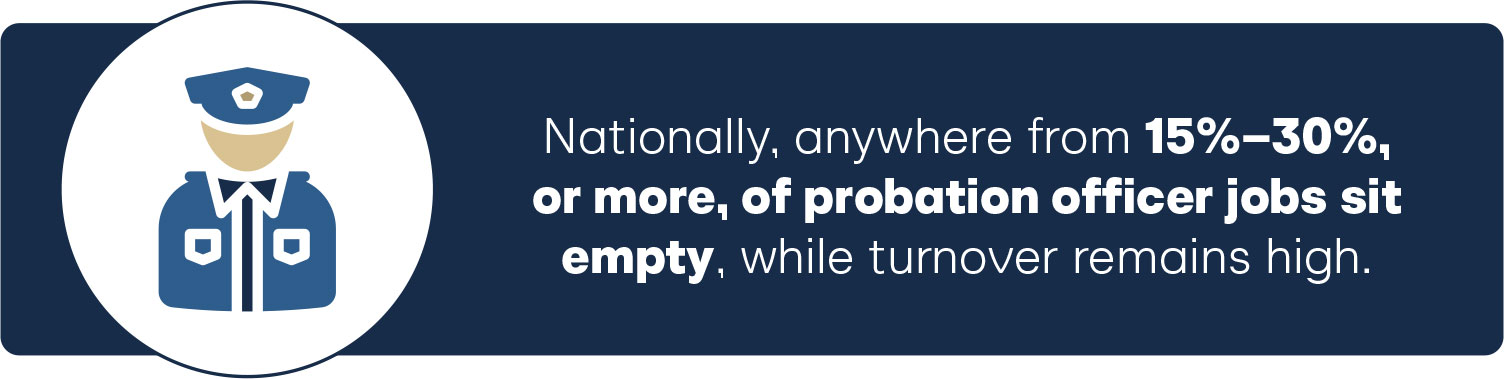
Probation and parole officers are burning out under a system that fails to recognize or reward success. Law enforcement agencies should establish monetary incentives that encourage parole and probation offices to create innovative programs that increase success rates in cases they manage.
2
Unemployment is the number-one predictor that an individual will violate their probation or parole. Parole and probation systems should reward low-risk, nonviolent offenders who maintain stable employment by reducing the length of their supervised parole or probation.
3
Kids who commit crimes are far more likely to continue down that path if they drop out of school. Kids who complete high school, mental health programs, and maintain sobriety should have their successes celebrated with reductions in supervised probation periods.
Probation and parole incentives allow departments to build on their success by investing a portion of the savings toward new programs and tools. This common-sense policy benefits everyone—saving taxpayers money, rewarding the best of our public servants, and rebuilding the lives of thousands of people.
WHY IT MATTERS
There are 4.5M convicted criminals on probation or parole in the U.S., and 95% of incarcerated individuals will eventually return to society. It is imperative that we get parole and probation right.
Strengthening families and communities through incentivized performance improves public safety. It reduces the cycle of crime that has, for too long, snowballed into an overwhelmed justice system, setting individuals up for failure.
THE BOTTOM LINE:
Effective parole and probation systems improve public safety, increase law enforcement morale, and help rebuild the lives of individuals who are ready to get their lives back on track.

Stay Informed
Sign up to receive updates about our fight for policies at the state level that restore liberty through transparency and accountability in American governance.