
Pharmacists Can Fill the Doctor Shortage Gap in Arkansas
Due to high patient volume, doctors are often booked weeks or months in advance. Many are experiencing burnout and are unable to give patients the attention they may need.
This dire situation leaves many patients with a difficult choice:


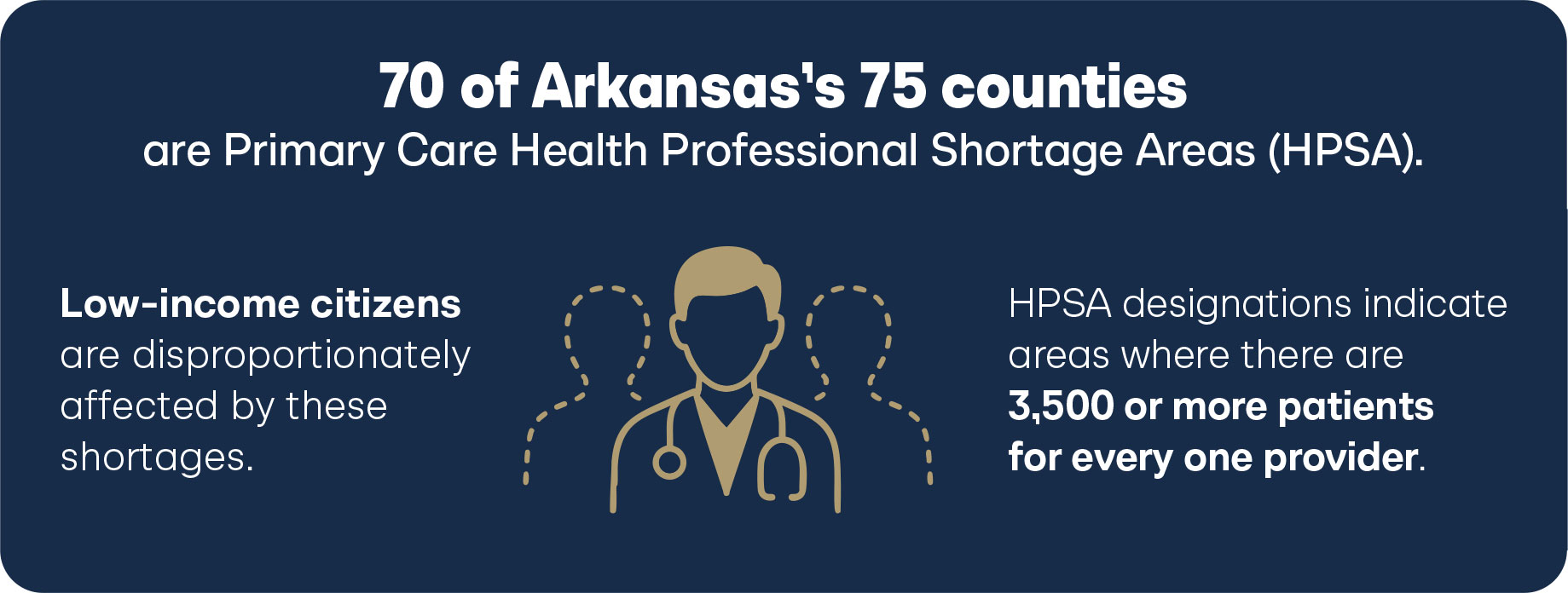
While pharmacists are an important part of the healthcare team with the extensive education and experience to help fill this gap, legislative and regulatory restrictions prevent them from doing so.

THE SOLUTION
Arkansas should immediately eliminate the red tape that prevents pharmacists from providing everyday healthcare services to their patients, as Idaho, Iowa, Colorado, and Montana have already done.
Patients consistently rank pharmacists as trusted healthcare providers. Allowing them to practice within the full scope of their training will dramatically expand healthcare access to the more than 90 percent of Americans who live within five miles of a community pharmacy—many of which are open on weekends and late at night.
WHY IT MATTERS
The United States is projected to be short more than 100,000 doctors by 2034, disproportionately affecting rural communities and creating more so-called “healthcare deserts.” Yet, the U.S. healthcare system is sidelining 330,000 pharmacists who are qualified to provide many medical services such as:
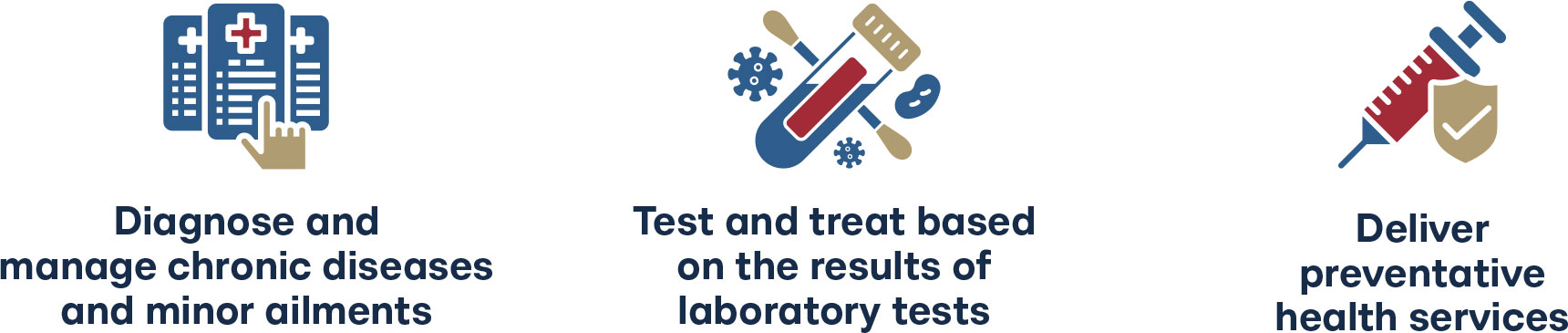
Pharmacy-based point-of-care testing and treatment services provide prevention and early detection for common health conditions. They can diagnose and manage chronic diseases and minor ailments like urinary tract infections, cold and flu symptoms, or allergies. As highly accessible providers, pharmacists can even provide consistent treatment for chronic conditions such as diabetes, hypertension, or asthma. This benefits Arkansans now and in the long run.
THE BOTTOM LINE:
Arkansas should immediately adopt a standard of care framework that allows pharmacists to practice to the full extent of their education and training. This should include the authority to diagnose, order and interpret laboratory tests, prescribe medications, and adapt prescriptions. Giving pharmacists the ability to deploy the full scope of their training and experience—especially in rural areas and healthcare deserts— is a safe and effective way to alleviate the pressure of physician shortages.

Stay Informed
Sign up to receive updates about our fight for policies at the state level that restore liberty through transparency and accountability in American governance.