
Making South Carolina a Leader in Regulatory Reform
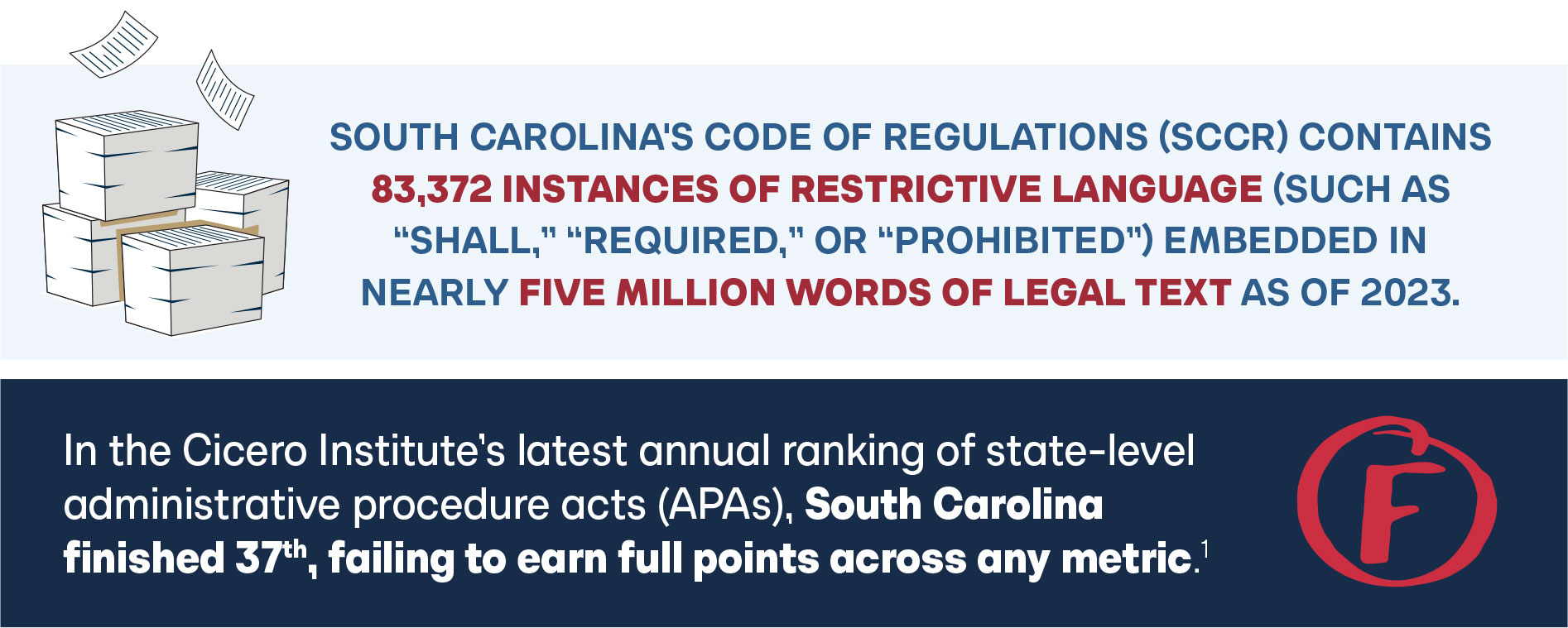
South Carolina’s promising trajectory is undermined by a legacy of regulatory constraints that have accumulated over time, slowing innovation, deterring entrepreneurship, and creating unnecessary burdens for citizens and businesses.
THE SOLUTION
Rather than treating symptoms—trying to strike down a handful of burdensome regulations—South Carolina should adopt a comprehensive statutory framework that strengthens accountability, clarifies agency authority, imposes meaningful cost-benefit requirements, and ensures that obsolete rules are eliminated automatically.
The Small Business Regulatory Freedom Act
This proposed legislation, if passed, would constitute perhaps the boldest and most consequential state-level regulatory reform in U.S. history.2
The bill contains several pivotal items designed to support South Carolina’s economy:
No Regulation Without Delegation
Rather than allowing agencies to roam freely into policy domains without legislative guidance, the Act ensures that regulators must anchor their actions in clear, statutory authority. It also proactively curbs regulatory accumulation by requiring agencies to remove outdated rules whenever they propose new ones.
Retrospective CBA Upon Sunset
(A First-Of-Its-Kind Provision)
This Act introduces a backward glance, ensuring that rules deliver on their promises and providing a model for other states and the federal government.
Continuously Updating Analytical Standards (Another National First)
Markets evolve, technologies advance, and best practices shift. By dynamically updating analytic methods, the Act ensures regulatory precision and encourages ongoing policy learning.
Automatic Expiration Every Eight Years
By mandating routine expiration, the Act ensures that the regulatory code remains fresh, relevant, and responsive.
Rigorous Cost-Benefit Analysis (CBA)
The Act calls for a genuine assessment of whether a rule’s benefits outweigh its costs.
De Novo Judicial Review
This provision restores the courts’ proper role, ensuring that statutory ambiguities aren’t quietly exploited to expand regulatory power.
Public, Transparent, and Machine-Readable Data (Yet Another First)
By making all underlying data publicly available in machine-readable formats, the Act empowers citizens, businesses, and researchers to scrutinize, understand, and challenge proposed rules.
These reforms would firmly establish South Carolina as a pioneer in regulatory reform. The package would not only foster a more vibrant, competitive state economy but also serve as a testbed for national policymakers. By implementing these reforms, South Carolina can demonstrate proof of concept for other states and even the federal government.
WHY IT MATTERS
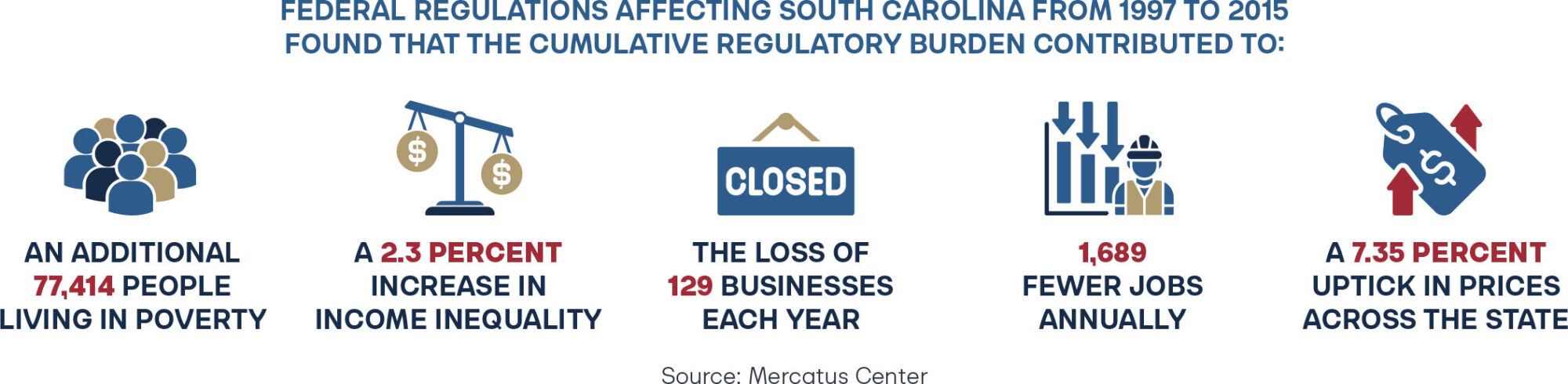
South Carolina is well-positioned to experience unprecedented economic growth. Yet, if the state is to leverage its population boom and maximize economic momentum, it must address structural flaws in its regulatory framework that slow innovation, deter entrepreneurship, and impose hidden costs on citizens and businesses.
THE BOTTOM LINE:
South Carolina’s tremendous growth potential is currently held back by antiquated regulatory procedures. Fortunately, the state can align its regulatory framework with its demographic and economic trajectory, inviting a more dynamic, prosperous, and innovative future.

Stay Informed
Sign up to receive updates about our fight for policies at the state level that restore liberty through transparency and accountability in American governance.