Safer Homelessness Service Spaces
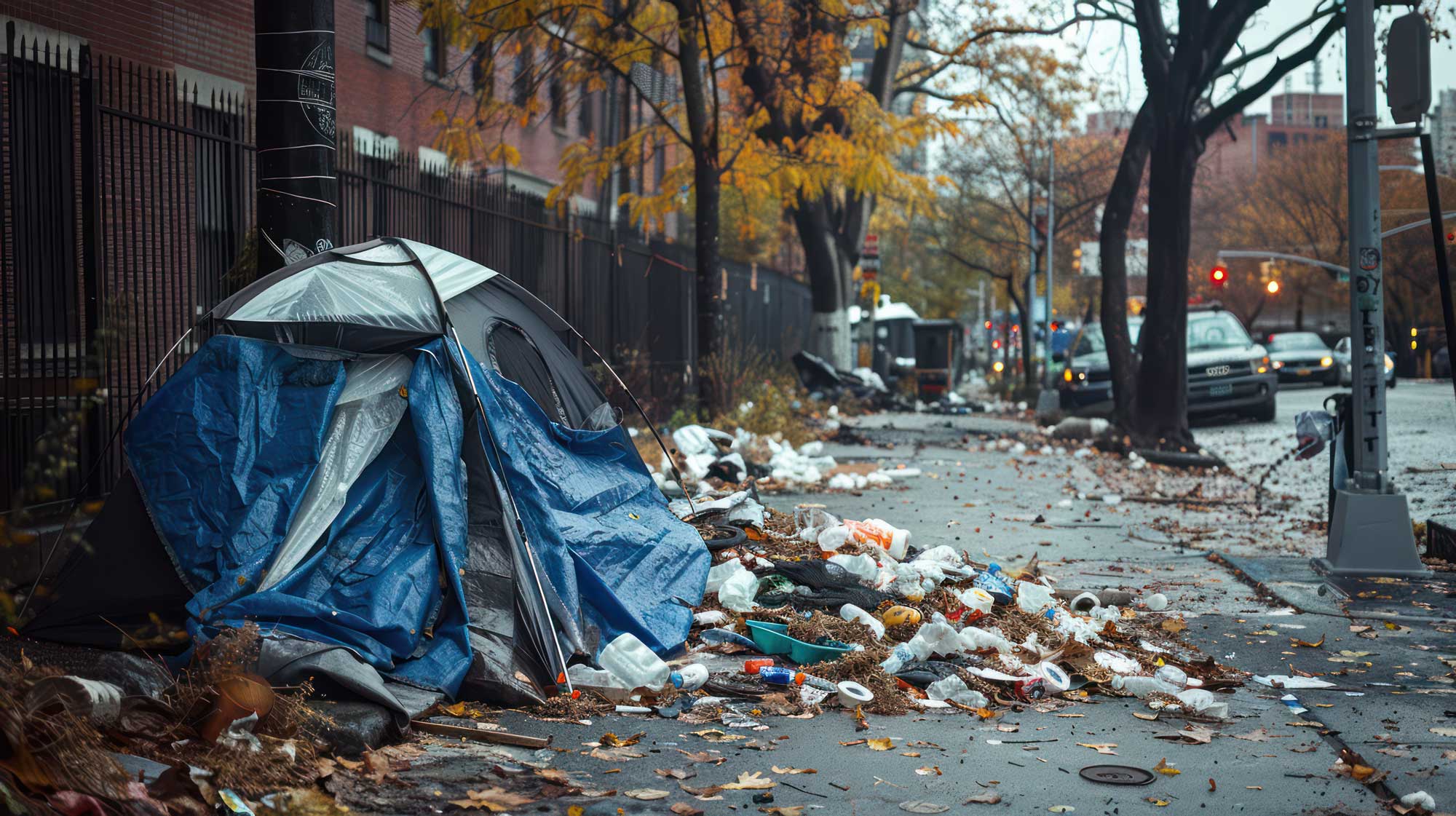
A record number of Americans are living on the street.
Among this population, substance abuse and serious mental illness are pervasive. In fact, some reports estimate 75% of the unsheltered struggle with addiction.1 Shelters should support recovery from drug abuse, not turn a blind eye to this deadly behavior.

THE SOLUTION
Drug-Free Homeless Service Zones
Historically, drug-free zones have been used to curb drug dealing in and near schools. Those laws exact more severe penalties for drug crimes committed near children. A similar model would apply penalties to facilities that offer safety, shelter, and services to homeless individuals. If a service provider fails to address drug use and trafficking on their property, they will face fines and possibly lose their license to operate.
WHY IT MATTERS
Policymakers should make a concerted effort to intervene in the drug market that preys on vulnerable people and perpetuates their destitution.
THE BOTTOM LINE:
Homelessness programs should serve to help vulnerable people and the communities in which they live, not perpetuate deadly cycles of criminal activity. By supporting recovery, more people can escape the dangers of life on the streets and begin the journey to rebuild their lives.

Stay Informed
Sign up to receive updates about our fight for policies at the state level that restore liberty through transparency and accountability in American governance.